How Hekate Acquired an Age.
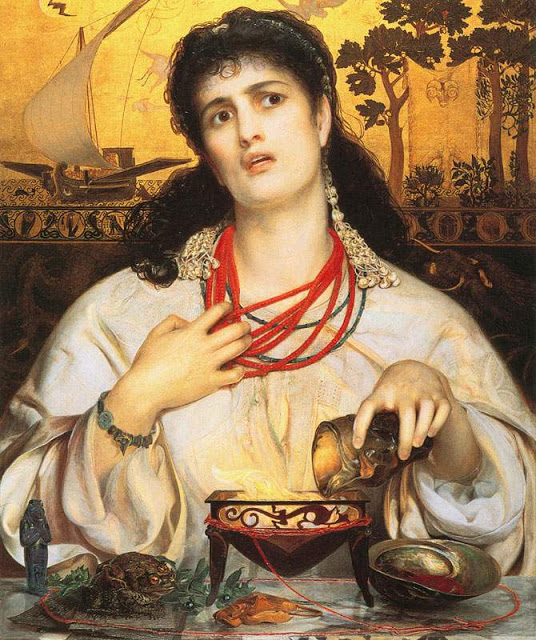
Why do some people persist with the idea that Hekate is a Crone? Or that she has any kind of age at all?
An idea may become familiar long before anyone asks whether it is true. Hekate’s supposed identity as the Crone is a case in point. Repeated in books, taught in circles and reproduced in countless pictures, it can seem an inheritance from antiquity. Yet familiarity is a poor substitute for evidence - even if it persists for decades.
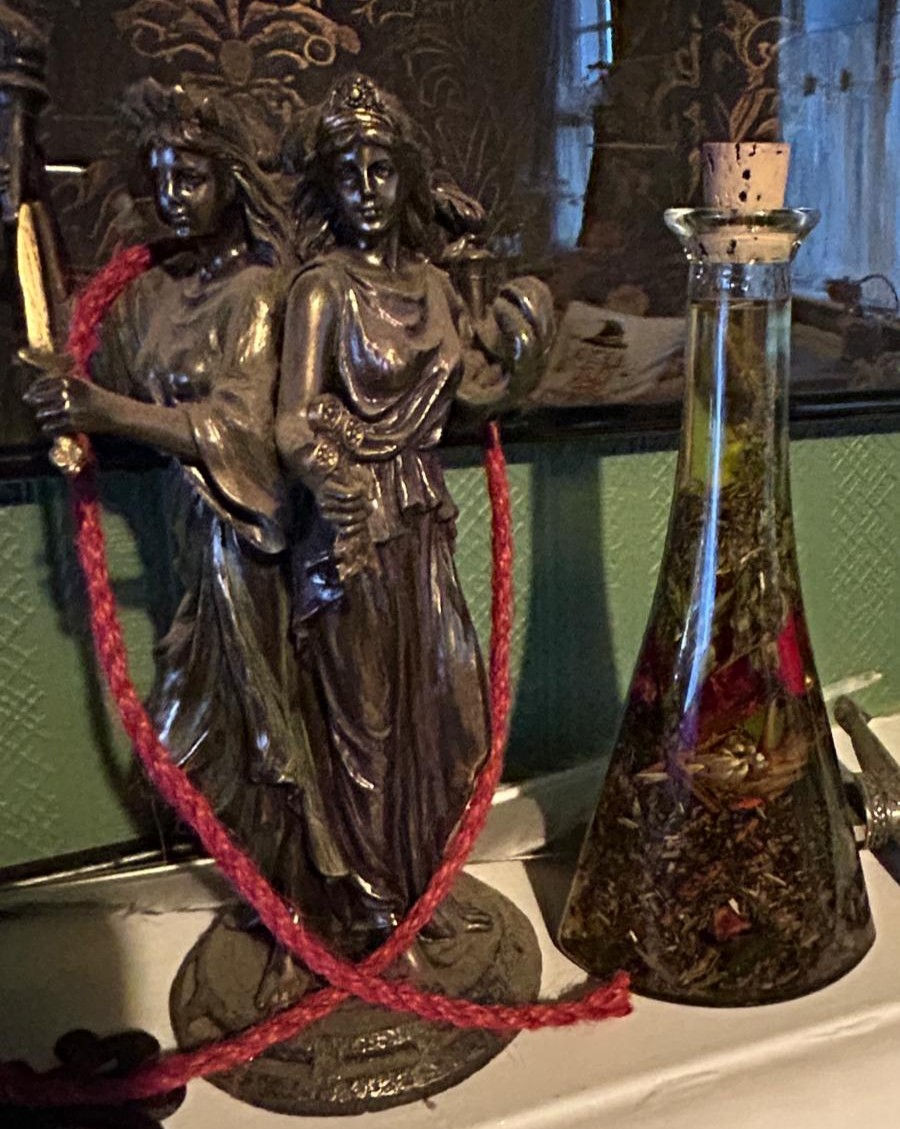
As Sorita d’Este explains in “Hekate’s Profanation,” the ancient goddess does not fit comfortably into the modern arrangement of Maiden, Mother and Crone. Her customary youthful appearance and her triple form belong to a different religious understanding. Three figures need not represent three ages of womanhood (d’Este, 2023). Pausanias describes Alkamenes’ three joined images of Hekate without assigning them successive ages (Description of Greece 2.30.2).

Why, then, does the Crone remain so firmly attached to her?
Perhaps the first reason is the attractiveness of a tidy scheme. Maiden, Mother and Crone offers an easily remembered pattern, linking human life with the changing moon. Once Persephone has been assigned the maiden’s place and Demeter the mother’s, Hekate is conveniently given the remaining chair. The arrangement seems to explain the goddesses, although it may chiefly explain our fondness for arrangements.
A second reason may lie in the imagery of witchcraft. Hekate’s associations with night, spirits and magic make her readily recognisable to those familiar with the old witch of folklore. The passage from powerful enchantress to aged woman can then occur almost unnoticed. But neither knowledge of the dead nor skill in magic establishes anyone’s age.
Modern occult literature supplied explicit precedents. In Moonchild, published in 1929, Aleister Crowley calls Hekate “the crone,” surrounding that description with hostility towards ageing women. His passage is evidence for a modern occult interpretation, rather than ancient Greek belief (Crowley, Moonchild, chapter XIV).
There is also a more sympathetic possibility. For some women, the Crone offers a sacred image of later life, authority and independence. Its personal importance may help explain why the association survives correction. An interpretation which gives someone dignity will not readily be surrendered merely because its history proves troublesome.
Yet honouring older women does not require us to rewrite an ancient goddess. Nor should correcting Hekate’s history imply that age is shameful. The question concerns the evidence for a particular identification.
Finally, repetition does its quiet work. A statement encountered everywhere begins to appear independently confirmed, even when its many versions repeat the same assumption. Pictures reinforce the words; the words explain the pictures. Eventually, the interpretation acquires the appearance of tradition.
We may find meaning in a modern image while remaining honest about its origins. That honesty gives devotion firmer ground. Hekate deserves the attention we would offer any respected teacher: the willingness to discover that she is more than we first supposed.
When did you first encounter Hekate described as a Crone, and how did it shape your understanding of her?
Why do you think this image remains so popular despite the ancient evidence?
How do you approach differences between historical evidence and personal experiences of Hekate?


Great post! She could also be associated with the Crone because both are in tune with wisdom. I believe Hecate comes to us in any form she wants befitting to what she wants to communicate.